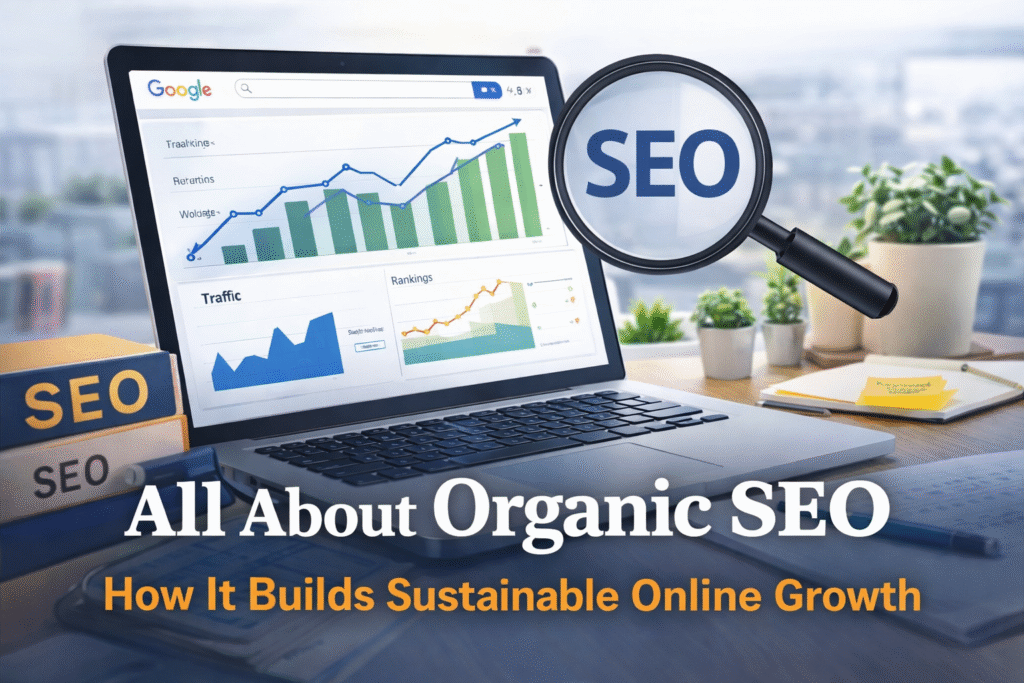
Organic SEO is the foundation of long-term digital success. While paid advertising can generate quick visibility, organic search optimization builds lasting authority, trust, and consistent traffic over time.
If you want your website to rank naturally, attract high-intent users, and grow without relying on constant ad spend, understanding organic SEO is essential. This guide explains what organic SEO is, how it works, and how businesses can use it to achieve sustainable growth.
What Is Organic SEO?
Organic SEO refers to the process of optimizing your website so it ranks naturally in search engine results without paid advertising. These rankings are earned through relevance, quality content, technical optimization, and authority-building efforts.
Unlike paid ads, organic SEO focuses on:
-
Long-term visibility
-
User-focused content
-
Search engine trust
-
Sustainable traffic growth
Organic results often generate higher credibility and stronger engagement compared to paid placements.
Why Organic SEO Matters for Businesses
Search engines are the starting point for most online experiences. When your website appears organically for relevant searches, you gain visibility at the exact moment users are looking for solutions.
Organic SEO helps businesses:
-
Increase brand credibility and trust
-
Attract high-intent traffic
-
Reduce dependency on paid ads
-
Generate consistent leads over time
For companies aiming for steady growth, organic SEO is not optional—it’s strategic.
How Organic SEO Works
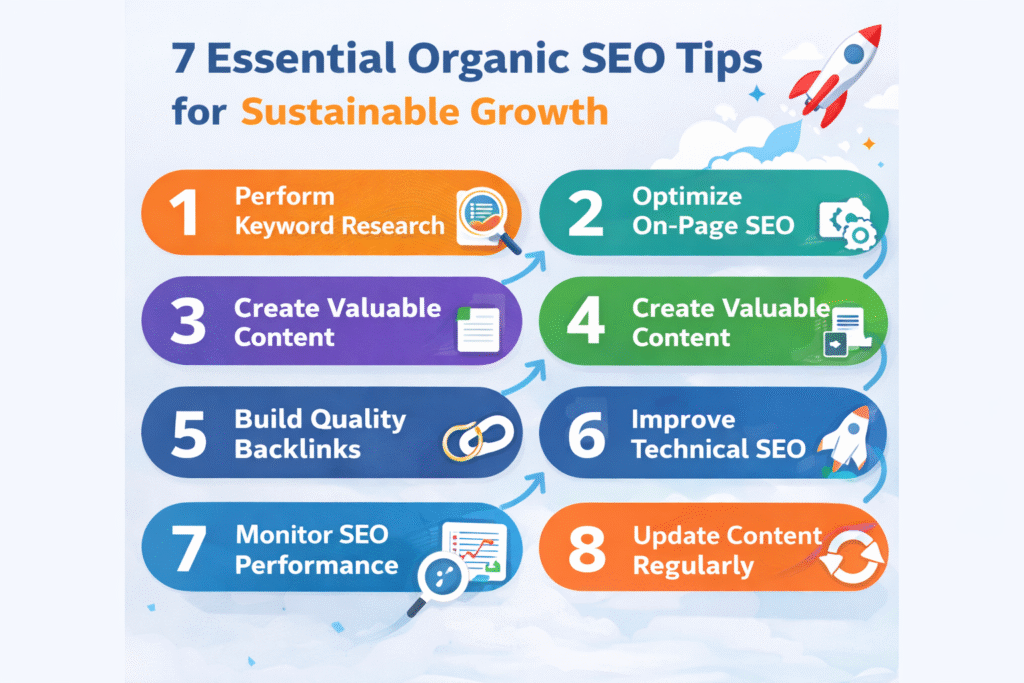
Organic SEO is built on several interconnected elements that work together to improve rankings and user experience.
Keyword Research and Search Intent
Effective organic SEO starts with understanding what users are searching for and why. Keywords must align with real user intent, not just search volume.
Content Optimization
Search engines reward content that is informative, relevant, and valuable. High-quality content answers questions, solves problems, and keeps users engaged.
On-Page SEO Signals
Optimizing titles, headings, meta descriptions, internal links, and content structure helps search engines understand your pages clearly.
Technical SEO Foundation
Fast loading speed, mobile optimization, clean URLs, and proper indexing are essential for organic performance.
Key Benefits of Organic SEO
Long-Term Traffic Growth
Once rankings are established, organic traffic continues without ongoing ad spend.
Higher Trust and Authority
Users trust organic search results more than paid ads, especially for research-driven queries.
Better ROI Over Time
Organic SEO requires upfront effort but delivers compounding returns as rankings improve.
Stronger User Experience
SEO-focused websites are easier to navigate, faster, and more helpful for visitors.
Common Organic SEO Mistakes to Avoid
Many websites struggle with organic SEO due to avoidable mistakes.
Ignoring Search Intent
Ranking for keywords that don’t match user intent leads to high bounce rates and low conversions.
Publishing Thin or Generic Content
Search engines prioritize depth, originality, and usefulness—not surface-level articles.
Poor Internal Linking
Internal links help distribute authority and guide users through related content.
Neglecting Technical SEO
Even great content won’t rank well if your site has technical issues.
Organic SEO vs Paid Search: What’s the Difference?
Organic SEO focuses on earning visibility over time, while paid search delivers immediate exposure through ads. Both have value, but organic SEO is the backbone of sustainable growth.
Many successful businesses combine organic SEO with other digital strategies through our services to create a balanced and scalable marketing approach.
How to Strengthen Your Organic SEO Strategy
To improve organic performance consistently:
-
Publish high-quality, intent-driven content
-
Optimize pages for users first, search engines second
-
Build internal links between related content
-
Monitor performance and refine regularly
Educational resources like custom blog creation play a critical role in building topical authority and long-term rankings.
Frequently Asked Questions
What is organic SEO?
Organic SEO is the process of improving a website’s visibility in unpaid search engine results through content optimization, technical improvements, and authority building.
How long does organic SEO take to show results?
Organic SEO typically takes 3–6 months to show noticeable improvements, depending on competition, content quality, and website authority.
Is organic SEO better than paid ads?
Organic SEO is better for long-term growth and trust, while paid ads are useful for short-term visibility. The best strategy often combines both.
Does organic SEO work for small businesses?
Yes, organic SEO is highly effective for small businesses because it builds consistent traffic and leads without ongoing ad spend.
How often should SEO content be updated?
SEO content should be reviewed every 6–12 months to keep it accurate, relevant, and competitive in search results.
Ready to Scale Organic SEO for Long-Term Growth?
Organic SEO is not about quick wins—it’s about building a strong digital foundation that delivers results year after year. With the right strategy, content, and optimization, organic search can become your most reliable traffic source.
If you’re ready to improve rankings, visibility, and sustainable growth, contact us to discuss an organic SEO strategy tailored to your business goals.