
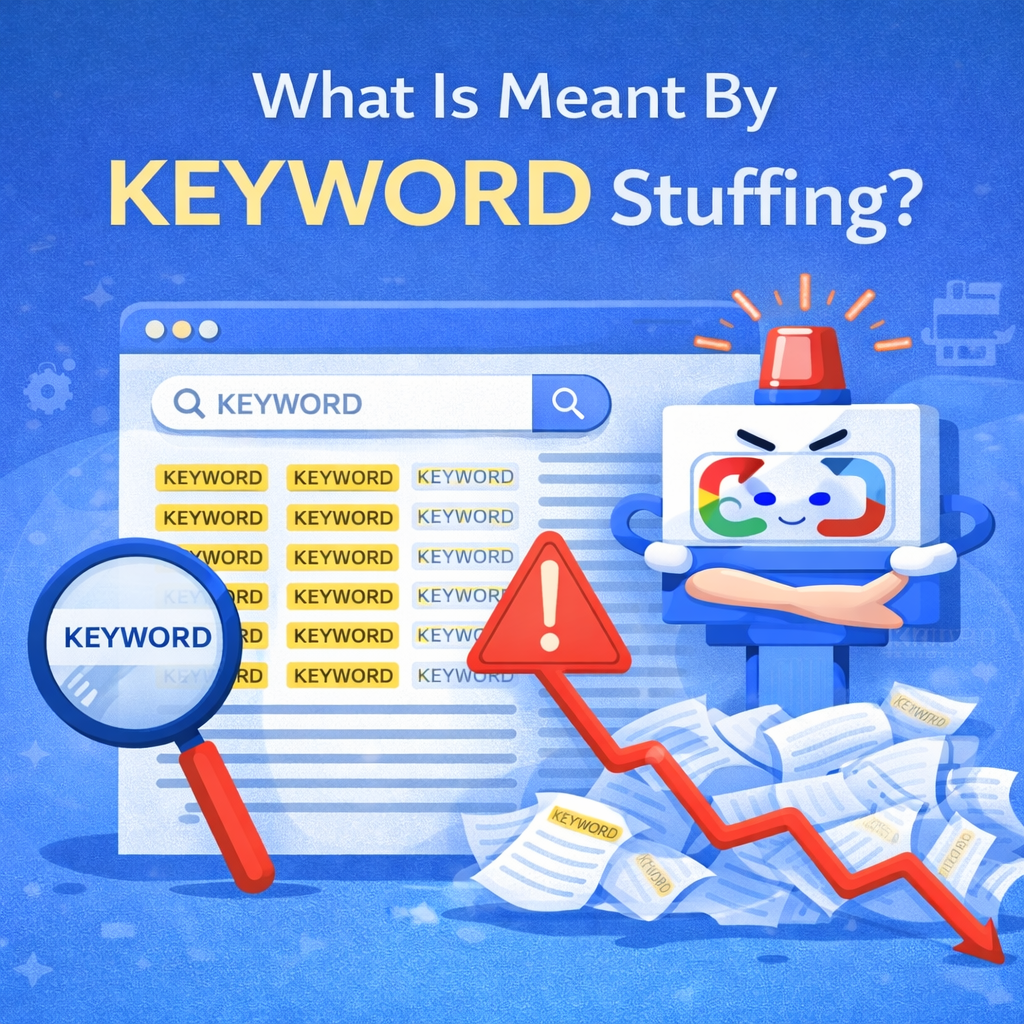
Keyword stuffing is an outdated SEO practice where a keyword or phrase is excessively repeated in website content to manipulate search engine rankings. While this tactic once worked in early search engines, today it leads to ranking drops, penalties, and poor user experience.
Modern search engines focus on relevance, context, and intent. Content created only to rank—rather than to help users—is easily identified and devalued.
Keyword stuffing is an outdated SEO practice where a keyword or phrase is excessively repeated in website content to manipulate search engine rankings. While this tactic once worked in early search engines, today it leads to ranking drops, penalties, and poor user experience.
Modern search engines focus on relevance, context, and intent. Content created only to rank—rather than to help users—is easily identified and devalued.
What Does Keyword Stuffing Mean?
Keyword stuffing refers to forcing keywords into content in a way that feels unnatural or repetitive. This can occur in:
-
Page body content
-
Headings and subheadings
-
Meta tags
-
URLs
-
Hidden text or code
Search engines now treat keyword stuffing as a spam signal rather than an optimization technique.
Common Types of Keyword Stuffing
Visible Keyword Stuffing
This happens when keywords are repeatedly used in readable content without adding value.
Example:
“Our SEO services are the best SEO services because our SEO services deliver SEO services results.”
This type of content feels robotic and damages credibility.
Hidden Keyword Stuffing
Hidden keyword stuffing places keywords where users cannot see them, such as:
-
White text on a white background
-
Text hidden behind images
-
Excessive keywords in HTML comments
-
CSS tricks like
display:none
Even if hidden from users, search engines can still detect and penalize this behavior.
Why Keyword Stuffing Is Bad for SEO
Search Engine Penalties
Search engines like Google actively penalize keyword stuffing. Consequences may include:
-
Sudden ranking drops
-
Loss of organic visibility
-
Manual actions in severe cases
Recovering from penalties often requires content rewrites and long-term trust rebuilding.
Poor User Experience
Keyword-stuffed content is difficult to read and frustrating. Visitors are more likely to:
-
Leave the page quickly
-
Distrust the brand
-
Avoid taking action
High bounce rates and low engagement directly impact SEO performance.
Reduced Brand Authority
High-quality content builds expertise and trust. Keyword stuffing does the opposite by making a website appear outdated and unprofessional.
Is There a Safe Keyword Density?
There is no fixed keyword density percentage anymore. Instead of counting keywords, focus on:
-
Natural language
-
Topic relevance
-
Search intent
-
Readability
If a keyword sounds forced when read aloud, it is likely overused.
What to Do Instead of Keyword Stuffing
Focus on Search Intent
Understand why users are searching for a keyword. Are they looking for information, comparisons, or solutions? Content should align with that intent.
Use Keyword Variations Naturally
Rather than repeating the same phrase:
-
Use synonyms
-
Add related terms
-
Cover supporting subtopics
Search engines now understand context, not just exact matches.
Write for Humans First
Content should educate, guide, or solve a problem. When users find value, rankings improve naturally.
Optimize Key Areas Strategically
Place keywords where they matter most:
-
Page title
-
Meta description
-
Headings (only where relevant)
-
Opening paragraph
Avoid forcing keywords into every sentence.
Keyword Stuffing vs Proper SEO Optimization
| Keyword Stuffing | Proper Optimization |
|---|---|
| Repetitive phrases | Natural language |
| Poor readability | User-focused content |
| Penalized by search engines | Aligned with guidelines |
| Short-term tactics | Long-term growth |
Does Keyword Stuffing Affect Paid Campaigns?
While keyword stuffing mainly impacts organic SEO, poor content quality can also reduce landing page performance in paid campaigns. Well-optimized content supports better results in Google Ads management services by improving relevance, engagement, and conversions.
Final Thoughts on Keyword Stuffing
Keyword stuffing is a black-hat SEO technique that no longer works. Search engines reward clarity, relevance, and usefulness—not repetition.
For long-term rankings and sustainable traffic, focus on creating content that genuinely helps users while aligning naturally with search intent.
Frequently Asked Questions
What is keyword stuffing in SEO?
Keyword stuffing is the excessive and unnatural repetition of keywords to manipulate search engine rankings.
Is keyword stuffing still penalized by Google?
Yes, search engines actively penalize keyword stuffing through algorithm updates and manual actions.
How can I avoid keyword stuffing?
Write naturally, focus on search intent, and use keyword variations instead of repetition.
Is keyword density still important?
No fixed percentage exists. Content should read naturally and provide value.
Can keyword stuffing reduce conversions?
Yes, it lowers trust and usability, leading to higher bounce rates and fewer conversions.