
Search engine optimization is often seen as complex, but many improvements come from simple, overlooked techniques. Small on-page SEO adjustments, especially the correct use of tags, can significantly improve visibility, rankings, and user engagement.
When implemented correctly, these foundational SEO elements help search engines understand your content while improving user experience and conversion potential.
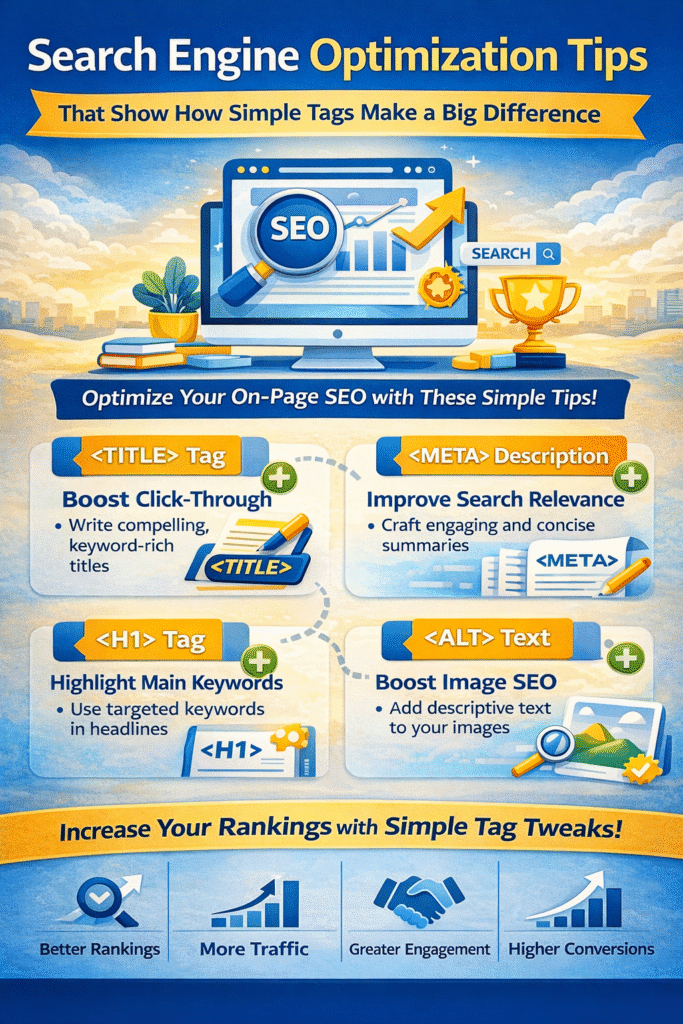
What Are Search Engine Optimization Tags?
SEO tags are HTML elements that provide structure and context to your website content. They help search engines interpret what a page is about and how it should be displayed in search results.
Tags such as title tags, meta descriptions, headings, and image attributes play a critical role in how content is indexed and ranked.
Why Simple SEO Tags Matter More Than You Think
Search engines rely heavily on structure. Even the most valuable content can underperform if it is not organized correctly.
Proper tagging improves crawlability, keyword relevance, and content clarity. These improvements directly impact rankings, click-through rates, and engagement metrics.
Title Tags and Their Impact on Rankings
Title tags are one of the most important on-page SEO elements. They tell search engines and users what a page is about.
A well-optimized title tag improves relevance, increases click-through rates, and supports keyword targeting. Titles should be clear, concise, and aligned with search intent.
This foundational work pairs perfectly with search engine optimization services for long-term performance.
Meta Descriptions and Click-Through Optimization
Meta descriptions do not directly affect rankings, but they strongly influence user behavior.
Compelling descriptions encourage clicks by clearly explaining page value. Higher click-through rates signal relevance and improve overall SEO performance.
Heading Tags for Content Structure
Heading tags organize content into logical sections, making it easier for users and search engines to navigate.
Clear heading hierarchies improve readability, accessibility, and keyword relevance. They also help search engines understand topic importance within a page.
Image Tags and Accessibility
Image tags provide descriptive context for images. While images enhance user experience, proper tags ensure accessibility and support SEO.
Optimized image attributes also contribute to faster load times and better performance across devices.
Internal Linking Using Simple Tags
Internal linking helps distribute authority and guide users through relevant content.
Strategic links improve crawl depth, engagement, and conversion paths. For example, connecting content with content marketing services strengthens topical relevance.
Technical Tags That Improve Performance
Tags such as canonical tags and structured URLs prevent duplicate content issues and improve indexation.
These technical elements ensure search engines focus on the correct pages, protecting rankings and authority.
Combining On-Page Tags With Off-Page SEO
On-page tags work best when supported by off-page SEO strategies.
Authority-building efforts such as backlinks and brand mentions amplify the impact of clean on-page optimization and create balanced SEO growth.
Using SEO Tags to Support Paid Campaigns
Optimized landing pages perform better in paid campaigns.
Businesses running ads often see improved results when SEO fundamentals support Google Ads management services through better relevance and quality scores.
Measuring the Impact of SEO Tag Optimization
SEO tag improvements should be tracked through rankings, engagement metrics, and conversions.
Small changes often deliver measurable results within weeks, especially for pages already receiving traffic.
Common SEO Tag Mistakes to Avoid
Many websites misuse tags by duplicating titles, skipping headings, or stuffing keywords.
These mistakes confuse search engines and reduce effectiveness. A clean, structured approach ensures tags support visibility instead of harming it.
Why SEO Fundamentals Still Matter Today
Even as algorithms evolve, search engines continue to reward clarity, structure, and relevance.
Simple SEO tags remain one of the most reliable ways to improve performance without large investments or complex strategies.
Long-Term Benefits of Proper SEO Tag Usage
Correct SEO tag implementation delivers long-term benefits.
Improved rankings, higher click-through rates, better user experience, and stronger conversions all compound over time as authority grows.
Ready to Improve Your Website’s SEO?
Search engine optimization does not always require advanced tactics. Often, the biggest improvements come from getting the basics right.
If you want to improve rankings, visibility, and conversions through smarter on-page optimization, professional SEO guidance can help.
Contact us to discuss an SEO strategy focused on simple improvements that drive real results.
FAQs
What are SEO tags?
SEO tags are HTML elements like title tags, meta descriptions, and headings that help search engines understand and rank content effectively.
Do simple SEO tags really affect rankings?
Yes. Proper tagging improves relevance, structure, and click-through rates, all of which support stronger SEO performance.
Which SEO tag is most important?
Title tags are considered the most influential, followed by headings and meta descriptions for engagement.
How often should SEO tags be updated?
SEO tags should be reviewed regularly, especially when updating content or targeting new keywords.
Can SEO tags improve conversions?
Yes. Clear titles, descriptions, and structure improve user experience and encourage action.