Targeted email marketing is one of the most effective ways to reach customers with messages that feel relevant, timely, and personalized. Instead of sending the same email to everyone, targeted campaigns focus on specific audiences based on behavior, preferences, and intent.
When email marketing is done right, it delivers higher open rates, stronger engagement, and better conversions. For businesses looking to build lasting customer relationships, targeted email marketing remains a powerful growth channel.
What Is Targeted Email Marketing?
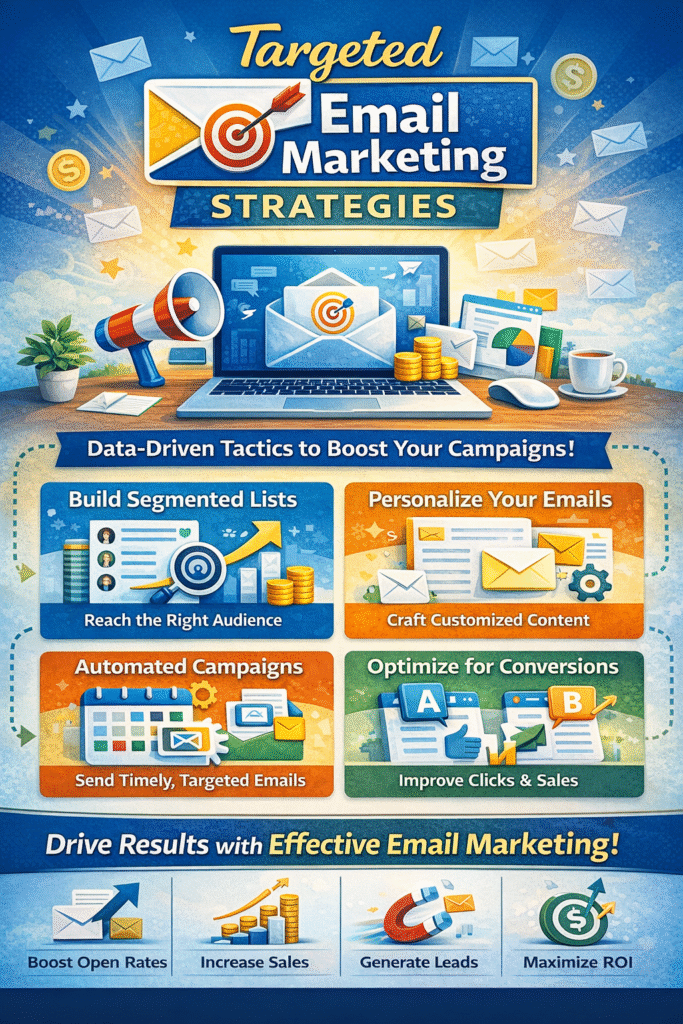
Targeted email marketing is the practice of sending customized emails to specific segments of your audience. These segments are created using data such as demographics, past purchases, website behavior, or engagement history.
By tailoring messaging to each group, businesses can deliver content that resonates more deeply and encourages action rather than being ignored.
Why Targeted Email Marketing Matters
Customers receive dozens of emails every day. Generic messages often get deleted without being opened. Targeted email marketing cuts through the noise by delivering content that aligns with what the recipient actually cares about.
Relevant emails build trust, strengthen relationships, and increase the likelihood of conversions. Over time, this leads to higher lifetime customer value and better return on investment.
How Targeted Email Marketing Works
Targeted email marketing starts with data collection and audience segmentation. Once segments are defined, businesses create tailored content designed to meet the needs of each group.
Automation tools then deliver emails at the right time based on triggers such as sign-ups, purchases, or abandoned carts. This ensures consistent communication without manual effort.
Audience Segmentation for Better Results
Segmentation is the foundation of targeted email marketing. Common segmentation methods include location, purchase history, engagement level, and customer lifecycle stage.
Smaller, focused segments allow businesses to send more relevant messages, resulting in higher open rates and click-through rates compared to broad, one-size-fits-all campaigns.
Personalization That Builds Connection
Personalization goes beyond using a subscriber’s name. It includes tailoring subject lines, content, offers, and timing based on user behavior and preferences.
Personalized emails feel more human and less promotional. This approach increases engagement while strengthening brand loyalty over time.
Content Strategies for Targeted Email Campaigns
Effective email content focuses on clarity, value, and relevance. Educational emails build trust, promotional emails drive conversions, and nurturing emails guide customers through the buying journey.
A balanced content strategy ensures subscribers stay engaged without feeling overwhelmed or pressured.
Automation and Email Marketing Funnels
Automation allows businesses to send targeted emails consistently and efficiently. Automated sequences welcome new subscribers, nurture leads, and re-engage inactive users.
Well-designed email funnels guide prospects step by step, increasing the chances of conversion while saving time and resources.
Measuring Targeted Email Marketing Performance
Tracking performance is essential for optimizing email campaigns. Key metrics include open rates, click-through rates, conversions, and unsubscribe rates.
Analyzing these metrics helps businesses refine subject lines, content, and segmentation strategies to improve results over time.
Common Mistakes in Targeted Email Marketing
Many businesses struggle with email marketing due to avoidable mistakes. Poor segmentation, inconsistent sending schedules, and overly promotional messaging can reduce engagement.
Ignoring analytics also limits growth. A data-driven approach ensures campaigns improve continuously rather than repeating the same errors.
Integrating Email Marketing With Other Channels
Targeted email marketing works best when integrated with other digital marketing efforts. Email can support content marketing, nurture leads from SEO traffic, and reinforce paid advertising campaigns.
Businesses often combine email strategies with Google Ads management services to engage users across multiple touchpoints and maximize conversions.
Long-Term Benefits of Targeted Email Marketing
Targeted email marketing delivers consistent, long-term value. As lists grow and segmentation improves, campaigns become more effective and cost-efficient.
This channel supports customer retention, repeat purchases, and brand loyalty while maintaining a high return on investment.
Ready to Improve Your Email Marketing Results?
Targeted email marketing is not about sending more emails. It is about sending the right message to the right person at the right time.
If you want to increase engagement, conversions, and customer loyalty through smarter email campaigns, a strategic approach makes all the difference.
Contact us to discuss a targeted email marketing strategy designed for measurable growth.
FAQs
What is targeted email marketing?
Targeted email marketing involves sending customized emails to specific audience segments based on data such as behavior, preferences, or past interactions. This approach increases relevance and engagement.
How does targeted email marketing improve conversions?
By delivering relevant messages to interested audiences, targeted email marketing increases open rates, clicks, and actions, leading to higher conversion rates.
Is targeted email marketing better than bulk email campaigns?
Yes. Targeted campaigns focus on relevance and personalization, which typically outperform bulk emails that use generic messaging.
What data is used for email segmentation?
Segmentation can use data such as location, purchase history, engagement behavior, demographics, and customer lifecycle stage.
How often should targeted emails be sent?
Frequency depends on your audience and goals. Consistent, value-driven communication works best without overwhelming subscribers.