For a while, many marketers believed social bookmarking was finished. Traditional platforms faded, engagement dropped, and attention shifted elsewhere.
Then Pinterest arrived—and quietly revived social bookmarking by turning it visual.
Pinterest isn’t just another social network. It’s a discovery engine powered by images, intent, and long-term visibility. If you’re not using Pinterest yet, it’s no longer a strategy choice—it’s a missed opportunity.
Here’s how to approach Pinterest the right way in four simple, effective steps.
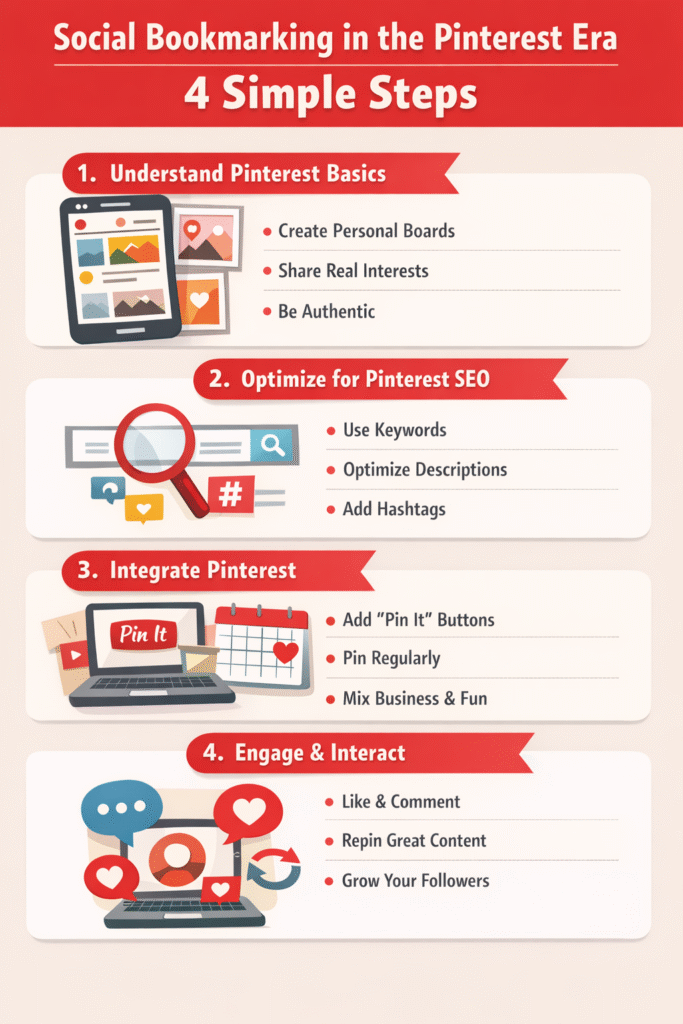
Step 1: Understand Pinterest Basics
Pinterest revolves around boards.
Boards are themed collections of images that reflect interests, ideas, and inspiration. Before you even think about business promotion, build a few boards around personal interests. This establishes authenticity and helps Pinterest treat your account like a real human—not a promotional robot.
Pinterest rewards:
-
Genuine behavior
-
Consistent activity
-
Real interests
People follow people—not ads.
Step 2: Optimize Pinterest for SEO
Pinterest has a powerful internal search engine.
Once you’re ready to create business-focused boards, optimization becomes critical. Pinterest allows keyword placement in multiple areas, all of which influence discoverability.
Key optimization areas include:
-
Profile name and description
-
Board titles
-
Board descriptions
-
Image descriptions
-
Hashtags and metadata
Pinterest SEO is subtle. Stuffing keywords looks spammy and hurts engagement. The goal is relevance—not repetition.
Step 3: Integrate Pinterest Into Your Workflow
Pinterest works best when it’s part of your routine.
Install the “Pin It” browser extension and make pinning habitual. Share content regularly—but sparingly when it comes to promotion.
A healthy balance looks like:
-
Mostly non-business pins
-
Occasional business content
-
Consistent activity over time
At the same time, make it easy for others to pin your content. Add “Pin It” buttons to your website, blog posts, and visual assets.
Let your audience do some of the sharing for you.
Step 4: Engage Like a Real Person
Pinterest is still social.
Engagement matters just as much as posting. Browse other users’ boards. Like, comment, and repin content that genuinely interests you—even when it has nothing to do with your business.
As your account becomes more active and personable:
-
Followers grow naturally
-
Engagement increases
-
Business pins receive more visibility
This is where social bookmarking truly pays off.
Why Pinterest Still Works for Social Bookmarking
Pinterest content has longevity.
Unlike fast-moving social feeds, pins can resurface months—or even years—after posting. That makes Pinterest uniquely valuable for long-term traffic, brand exposure, and SEO support.
Done right, Pinterest becomes a quiet but powerful engine working in the background.
FAQ
Is social bookmarking still relevant today?
Yes. Social bookmarking has evolved, and platforms like Pinterest have made it more effective through visual discovery.
Why is Pinterest different from other social networks?
Pinterest functions as a search and discovery platform rather than a real-time social feed.
Does Pinterest help with SEO?
Indirectly, yes. Optimized pins increase visibility, referral traffic, and brand signals over time.
How often should businesses post on Pinterest?
Consistency matters more than frequency. A few quality pins per week is enough.
Should Pinterest accounts be personal or business-focused?
They should feel personal first. Authentic engagement performs better than aggressive promotion.