Small business SEO is one of the most effective ways to grow online without relying on expensive advertising. When your business appears in search results at the exact moment customers are looking for your services, you gain visibility, credibility, and consistent leads.
Unlike short-term marketing tactics, SEO builds long-lasting value. With the right strategy, small businesses can compete with larger brands by targeting the right keywords, locations, and customer intent.
What Is Small Business SEO?
Small business SEO is the process of optimizing your website to rank higher in search engines for relevant keywords related to your products or services.
It focuses on attracting high-intent traffic, improving local visibility, and converting visitors into customers. The goal is not just traffic, but qualified traffic that leads to growth.
Why SEO Is Essential for Small Businesses
Most customers begin their buying journey online. If your business does not appear in search results, potential customers may never know you exist.
SEO helps small businesses build trust, establish authority, and stay competitive without the high costs associated with paid advertising. It also supports long-term growth by generating organic traffic month after month.
How Small Business SEO Works
SEO works by improving multiple elements of your website and online presence so search engines can understand, rank, and recommend your business.
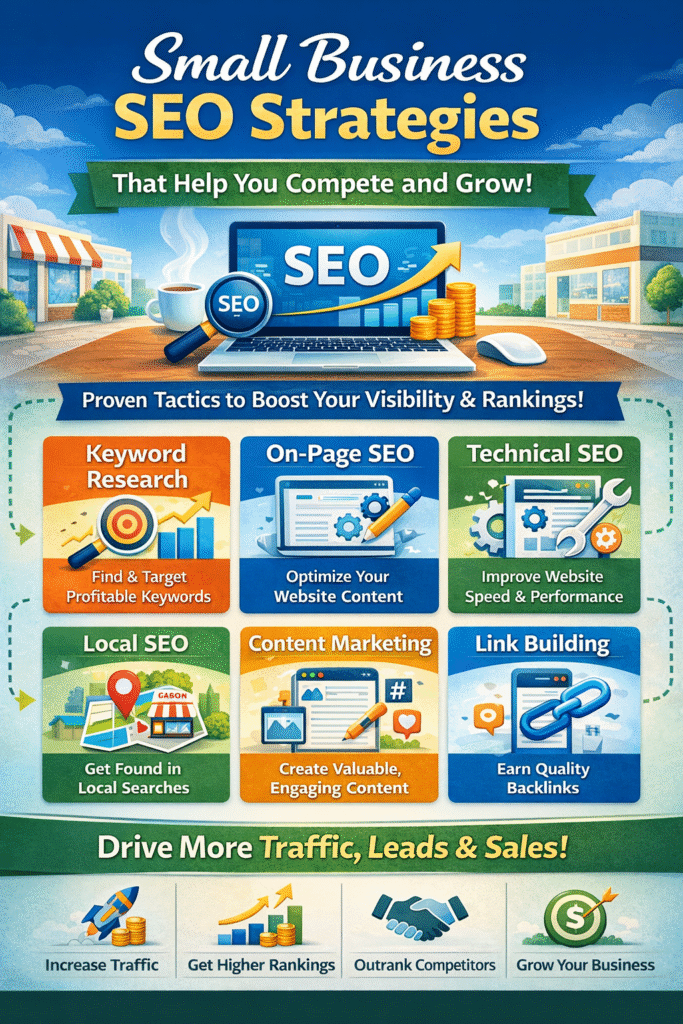
This includes keyword research, content optimization, technical improvements, local SEO signals, and ongoing performance tracking. Each element contributes to stronger visibility and higher rankings.
Keyword Research for Small Businesses
Keyword research is the foundation of effective SEO. It identifies the search terms your ideal customers use when looking for your services.
Small businesses benefit most from targeting specific, intent-driven keywords rather than highly competitive generic terms. This approach brings more qualified traffic with a higher likelihood of conversion.
On-Page SEO Optimization
On-page SEO focuses on optimizing individual pages on your website. This includes page titles, headings, meta descriptions, internal links, and content structure.
Clear messaging, relevant keywords, and easy navigation help both users and search engines understand the value of your pages.
Local SEO for Small Businesses
Local SEO is critical for businesses that serve specific geographic areas. It helps your business appear in local search results and map listings.
Optimizing location pages, business listings, and customer reviews increases visibility for nearby customers who are ready to take action.
Content Marketing That Builds Authority
Content plays a major role in small business SEO. Informative blog posts, service pages, and guides answer customer questions and build trust.
Consistent content creation also improves keyword coverage and supports long-term ranking growth across multiple search queries.
Technical SEO Basics You Cannot Ignore
Technical SEO ensures your website performs well for both users and search engines. This includes site speed, mobile responsiveness, secure connections, and crawlability.
Even small technical improvements can lead to better rankings, improved user experience, and higher conversion rates.
Combining SEO With Paid Advertising
While SEO delivers long-term growth, paid advertising can generate immediate visibility. Many small businesses combine SEO with Google Ads management services to capture demand at every stage of the customer journey.
This balanced approach maximizes exposure while maintaining cost control.
Measuring Small Business SEO Success
SEO success is measured through clear metrics such as keyword rankings, organic traffic, leads, and conversions.
Tracking performance allows businesses to identify what is working, refine strategies, and continuously improve results without guesswork.
Common Small Business SEO Mistakes
Many small businesses struggle with SEO due to avoidable errors. These include targeting the wrong keywords, ignoring local optimization, publishing low-quality content, or neglecting analytics.
A focused strategy helps avoid wasted effort and ensures every optimization supports real business goals.
Choosing the Right SEO Partner
An experienced SEO partner understands the challenges small businesses face. The right team focuses on transparency, measurable outcomes, and strategies aligned with your budget and growth goals.
This partnership allows you to focus on running your business while experts manage your SEO performance.
Long-Term Benefits of Small Business SEO
Small business SEO delivers compounding returns. As your site gains authority, rankings improve, traffic increases, and leads grow consistently.
Over time, SEO becomes one of the most cost-effective marketing channels for sustainable business growth.
Ready to Grow Your Small Business Online?
Small business SEO is not about shortcuts. It is about building visibility, trust, and steady growth through proven strategies.
If you are ready to attract more customers and compete confidently in your market, professional SEO support can make the difference.
Contact us to discuss a customized small business SEO strategy designed for growth.
FAQs
What is small business SEO?
Small business SEO is the process of optimizing a website to rank higher in search engines for relevant keywords. It helps small businesses attract targeted traffic, generate leads, and grow organically.
How long does small business SEO take to work?
SEO is a long-term strategy. Most small businesses begin seeing noticeable improvements within three to six months, with stronger results building over time.
Is SEO affordable for small businesses?
Yes. SEO is scalable and can be tailored to fit smaller budgets. It often delivers better long-term value compared to ongoing paid advertising.
Does local SEO matter for small businesses?
Local SEO is extremely important for businesses serving specific areas. It helps attract nearby customers who are actively searching for services.
Can small businesses compete with larger companies using SEO?
Yes. By targeting specific keywords, locations, and customer intent, small businesses can compete effectively with larger brands in search results.