
A strong search engine optimization strategy is essential for businesses that want consistent visibility, qualified traffic, and sustainable growth. SEO is no longer about isolated tactics or quick wins. It requires a structured approach that aligns content, technical performance, and user intent.
Without a clear SEO strategy, even well-designed websites struggle to rank or convert. Search engines reward websites that provide value, relevance, and strong user experience. That’s why building a thoughtful SEO strategy is critical for long-term success.
In this guide, we’ll break down what an SEO strategy is, why it matters, and how businesses can implement a strategy that delivers measurable results.
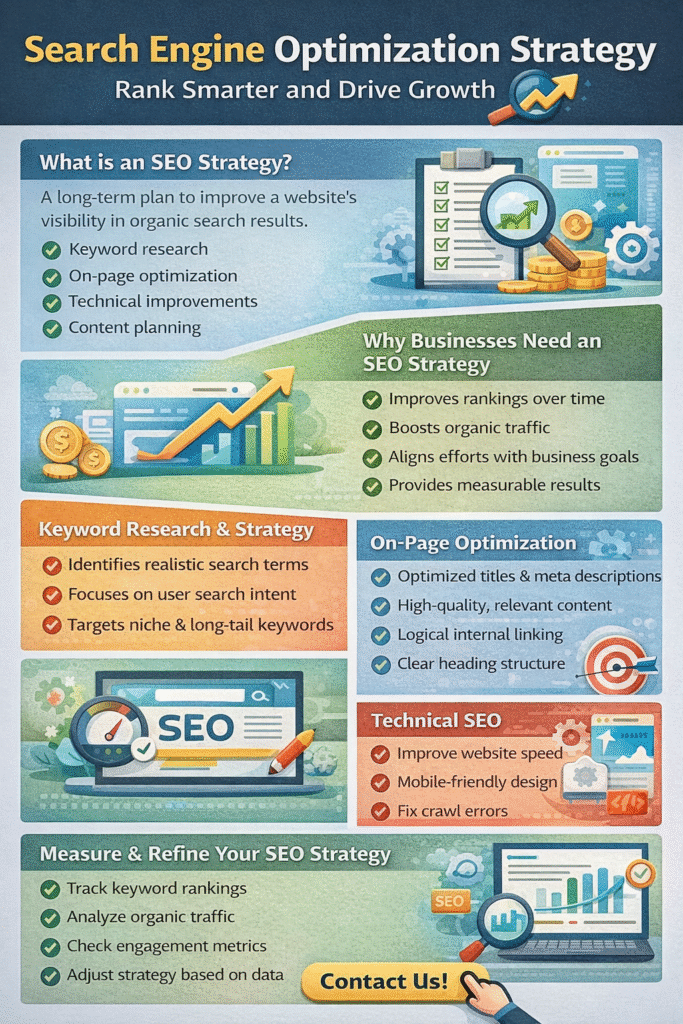
What Is a Search Engine Optimization Strategy?
A search engine optimization strategy is a long-term plan designed to improve a website’s visibility in organic search results. It focuses on aligning website structure, content, and authority with how search engines evaluate and rank pages.
An effective SEO strategy typically includes:
-
Keyword research and search intent analysis
-
On-page optimization
-
Technical SEO improvements
-
Content planning and optimization
-
Authority building through ethical practices
Rather than chasing algorithms, a solid SEO strategy focuses on serving users better than competitors.
Why Is an SEO Strategy Important for Businesses?
SEO without a strategy often leads to inconsistent results. Businesses may see short-term gains, but rankings and traffic usually decline without direction and consistency.
Benefits of a Defined SEO Strategy
-
Clear priorities and measurable goals
-
Better use of time and budget
-
Improved search visibility over time
-
Stronger alignment with business objectives
A structured SEO strategy ensures every optimization effort supports long-term growth rather than temporary improvements.
How Keyword Research Shapes SEO Strategy
Keyword research is the foundation of every successful SEO strategy. It helps businesses understand what their audience is searching for and how competitive those searches are.
Focusing on Search Intent
Modern SEO goes beyond keywords and emphasizes search intent. Understanding whether users are looking for information, services, or solutions allows businesses to create content that matches expectations.
Strategic Keyword Selection
A balanced SEO strategy includes:
-
Primary keywords for core pages
-
Long-tail keywords with clear intent
-
Semantic and related terms for context
This approach helps websites rank for multiple relevant queries while maintaining natural, readable content.
On-Page Optimization as Part of SEO Strategy
On-page SEO ensures that individual pages are structured and optimized for both users and search engines.
Key On-Page Elements
-
Clear heading hierarchy
-
Optimized page titles and descriptions
-
High-quality, relevant content
-
Logical internal structure
When on-page elements are aligned with keyword strategy and user intent, pages become easier to rank and more engaging for visitors.
Technical SEO and Website Performance
Technical SEO plays a crucial role in overall strategy. Even the best content won’t perform if search engines can’t crawl or index a website properly.
Technical Factors That Matter
-
Website speed and performance
-
Mobile responsiveness
-
Secure connections
-
Clean URL structures
Addressing technical issues improves both search rankings and user experience, making technical SEO a core component of any effective strategy.
Content Planning and SEO Strategy
Content is a major driver of organic traffic, but only when it’s created with purpose and strategy.
Creating Content That Supports SEO Goals
An SEO-focused content strategy includes:
-
Publishing content that answers user questions
-
Updating and optimizing existing pages
-
Structuring content for readability
-
Aligning topics with keyword research
Quality content builds authority, keeps users engaged, and supports long-term SEO success.
Measuring and Refining Your SEO Strategy
SEO is not a one-time effort. Continuous monitoring and refinement are necessary to stay competitive.
Key Metrics to Track
-
Organic traffic growth
-
Keyword ranking trends
-
User engagement signals
-
Conversion performance
Analyzing data allows businesses to identify what’s working and adjust strategy for better results over time.
Ready to Build a Smarter SEO Strategy?
A well-planned search engine optimization strategy helps businesses grow consistently, attract the right audience, and convert traffic into measurable outcomes. By focusing on keywords, content, technical performance, and user experience, businesses can create SEO strategies that stand the test of time.
If you’re ready to improve your rankings and build a results-driven SEO strategy, Contact us to get started with expert guidance.
FAQs
What is a search engine optimization strategy?
A search engine optimization strategy is a long-term plan designed to improve a website’s organic visibility by aligning content, technical performance, and authority with search engine guidelines. It focuses on sustainable growth rather than short-term ranking tactics.
How long does an SEO strategy take to work?
SEO strategies typically take several months to show consistent results. Timelines depend on competition, website authority, and execution quality. While early improvements may appear sooner, long-term success requires ongoing optimization.
Why is keyword research important in SEO strategy?
Keyword research helps identify what users are searching for and how competitive those searches are. It ensures that content aligns with user intent and targets opportunities that can realistically drive traffic and conversions.
Can small businesses benefit from an SEO strategy?
Yes, small businesses benefit significantly from SEO strategies that focus on niche or local keywords. A well-planned strategy helps smaller brands compete effectively without relying heavily on paid advertising.
How do I know if my SEO strategy is successful?
Success is measured through improved rankings, increased organic traffic, better engagement, and higher conversions. Monitoring performance over time helps refine and strengthen the strategy.