Organic SEO is the foundation of long-term success in search engines. Instead of relying on paid advertising, organic search engine optimization focuses on earning visibility naturally by improving relevance, authority, and user experience.
Businesses that invest in organic SEO create a digital asset that continues to generate qualified traffic over time. Unlike short-term tactics, organic SEO compounds in value, helping brands build credibility, trust, and consistent growth in competitive markets.
This guide explains how organic SEO works, why it matters, and how businesses can use it to achieve sustainable search performance.
What Is Organic SEO?
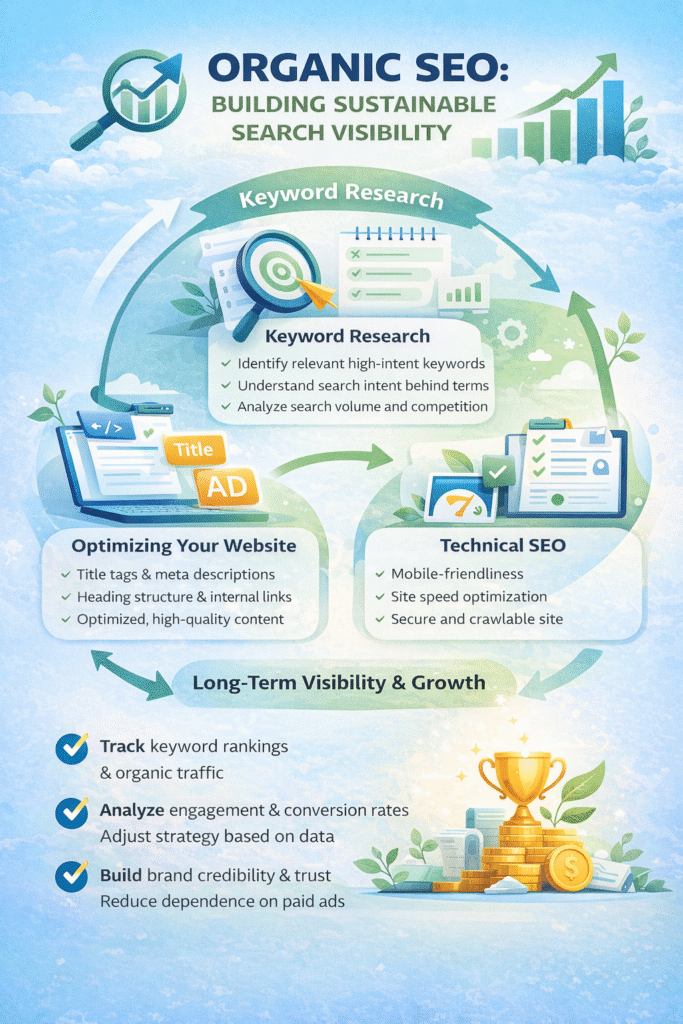
Organic SEO, also known as organic search engine optimization, is the process of improving a website’s visibility in unpaid search results. It focuses on optimizing content, technical structure, and overall site performance so search engines rank pages naturally for relevant queries.
Organic SEO includes:
-
Keyword and search intent research
-
On-page optimization
-
Technical SEO improvements
-
Content creation and optimization
-
Authority and trust building
Unlike paid ads, organic SEO delivers long-term value by continuously attracting high-intent users.
Why Organic SEO Is Critical for Long-Term Growth
Paid campaigns deliver traffic only while budgets are active. Organic SEO continues working even when advertising spend stops.
Key benefits of organic SEO include:
-
Sustainable traffic growth
-
Higher trust and credibility with users
-
Lower long-term acquisition costs
-
Stronger brand authority
Businesses that focus on organic SEO reduce dependency on ads and build a more resilient digital presence.
How Organic SEO Supports the Full Buyer Journey
Organic SEO supports customers at every stage of the decision-making process.
Awareness Stage
Educational content helps users discover your brand while researching industry topics.
Consideration Stage
Optimized service and comparison pages position your business as a credible solution.
Decision Stage
Conversion-focused pages guide users toward contacting your business or requesting services.
Organic SEO ensures your brand remains visible throughout the entire buyer journey.
Keyword Research as the Foundation of Organic SEO
Keyword research is one of the most important components of organic SEO. It identifies how users search and what intent lies behind each query.
Effective organic SEO keyword research focuses on:
-
Search intent rather than raw volume
-
Long-tail keywords with strong relevance
-
Semantic and related search terms
Understanding modern search engine optimization techniques helps businesses align keyword targeting with ranking factors and user expectations.
On-Page Optimization for Organic Search Performance
On-page SEO ensures each page is structured clearly for both users and search engines.
Core on-page organic SEO elements include:
-
Optimized page titles and meta descriptions
-
Clear heading hierarchy
-
High-quality, intent-driven content
-
Logical internal linking
Strong on-page optimization improves crawlability, rankings, and engagement.
Technical SEO as the Backbone of Organic SEO
Technical SEO ensures search engines can access, understand, and index your website efficiently.
Key technical SEO priorities include:
-
Mobile responsiveness
-
Fast page load speeds
-
Secure site architecture
-
Clean URLs and crawlability
Businesses investing in professional search engine optimization services ensure their technical foundation supports long-term organic growth.
Content Strategy for Organic SEO Growth
Content is the engine that drives organic SEO success. Search engines reward websites that consistently publish valuable, relevant, and structured content.
Effective organic SEO content includes:
-
Educational blog posts
-
In-depth guides and resources
-
Optimized service pages
-
Regular content updates
Organic SEO performs best when supported by a strong website foundation such as professional website design in Los Angeles,
which improves usability and conversions.
Internal Linking and Website Structure for Organic SEO
Internal linking strengthens organic SEO by distributing authority across your site and improving navigation.
Benefits of strategic internal linking include:
-
Better crawl depth and indexing
-
Improved topical relevance
-
Clear user navigation paths
A well-structured website enhances both SEO performance and user experience.
Organic SEO vs Paid Search Advertising
Organic SEO and paid search serve different purposes but deliver very different long-term value.
Organic SEO Advantages
-
Sustainable traffic without ongoing ad spend
-
Higher user trust
-
Compounding ROI over time
Paid Search Limitations
-
Traffic stops when ads stop
-
Rising costs with increased competition
-
Lower long-term efficiency
Many businesses balance organic SEO with Google Ads management services to support short-term goals while organic SEO builds lasting growth.
Measuring Organic SEO Performance
Organic SEO success must be monitored and refined continuously.
Key performance indicators include:
-
Organic traffic growth
-
Keyword ranking improvements
-
Engagement metrics
-
Leads and conversions from organic search
Data-driven optimization ensures organic SEO strategies remain effective and aligned with business objectives.
Ready to Grow With Organic SEO?
Organic SEO is one of the most effective strategies for building long-term visibility, attracting qualified traffic, and growing your business without relying on ads.
If you’re ready to invest in sustainable search growth, Contact us to get started with expert organic SEO support.
FAQs
What is organic SEO?
Organic SEO is the process of improving a website’s visibility in unpaid search results through content optimization, technical SEO, and authority building.
How long does organic SEO take to show results?
Organic SEO usually takes several months to deliver consistent improvements. Timelines depend on competition, website authority, and execution quality.
Is organic SEO better than paid advertising?
Organic SEO delivers long-term sustainability and trust, while paid advertising provides short-term visibility. Organic SEO often produces higher ROI over time.
What type of content works best for organic SEO?
Blogs, guides, optimized service pages, and regularly updated resources perform best for organic SEO by aligning with search intent.
How do I measure organic SEO success?
Organic SEO success is measured through keyword rankings, organic traffic growth, engagement metrics, and conversions from organic search.