
Before diving into mobile website design, it’s essential to master the fundamentals of traditional website design. Mobile design doesn’t replace desktop principles—it builds on them.
If a website can’t function properly on a desktop, it has no chance of performing well on mobile. Understanding these core building blocks ensures that your mobile site is profitable, credible, and user-friendly from day one.
SEO Is Not Optional
Search engine optimization is a requirement, not an enhancement.
A website that isn’t optimized for search engines is invisible, regardless of how clean the code or how beautiful the design may be. Every business website exists to generate traffic, leads, or sales—and SEO is what makes that possible.
Before designing for mobile, you must understand:
-
How search engines crawl websites
-
How content is indexed
-
How structure impacts visibility
Without SEO knowledge, web design is just decoration.
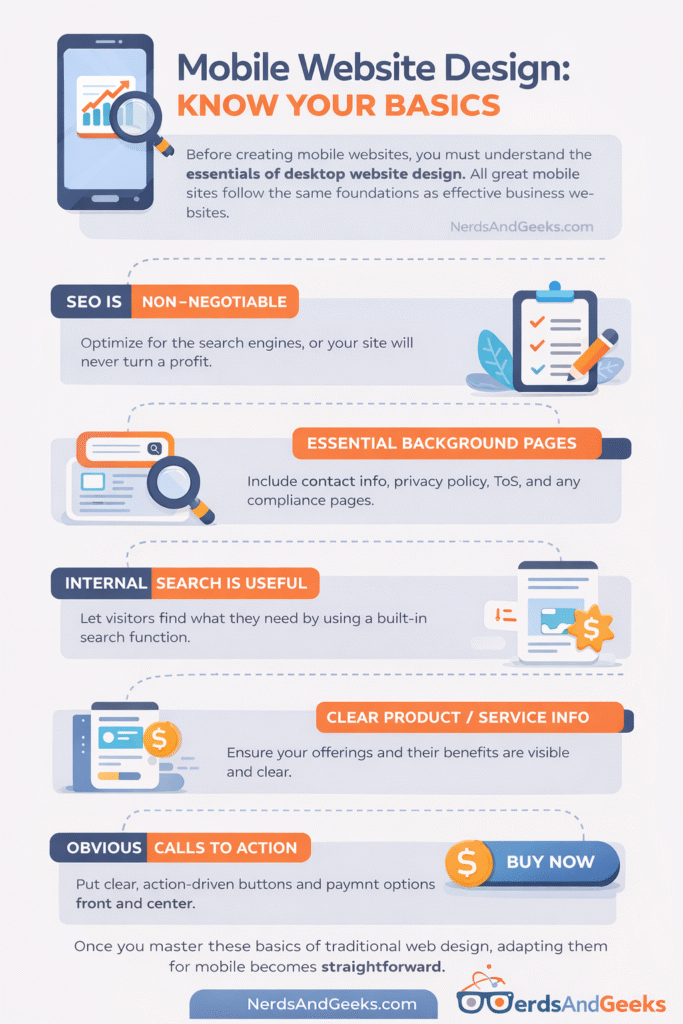
Every Website Needs the Right Background Pages
Legitimacy matters.
Certain pages are essential for trust, compliance, and professionalism. These pages don’t just protect the business—they also reassure users.
Common required pages include:
-
Contact information
-
Privacy policy
-
Terms of service
-
Sitemap
-
End-user license agreements (when applicable)
A site without these elements appears incomplete and unreliable.
Search Functionality Improves Usability
Navigation isn’t always enough.
As websites grow, users need fast ways to find information. A built-in search function prevents frustration and reduces bounce rates.
Search features:
-
Help users rediscover content
-
Improve engagement
-
Support accessibility
If a visitor can’t find what they’re looking for, they won’t stay.
Clear Product or Service Information Is Mandatory
A website exists to communicate value.
Visitors should instantly understand:
-
What is being offered
-
Who it’s for
-
Why it matters
Even if copywriting is outsourced, designers must understand how content is structured and presented. Design supports conversion—not the other way around.
Calls to Action and Payment Paths Must Be Obvious
No action means no business.
Every site needs a clear next step. Whether that’s purchasing a product, downloading a resource, or submitting a form, the path must be unmistakable.
Effective calls to action:
-
Stand out visually
-
Explain what happens next
-
Reduce uncertainty
If visitors are confused, conversions disappear.
Why These Basics Matter for Mobile Design
Mobile design magnifies every weakness.
Poor structure, unclear navigation, or missing functionality become far more damaging on smaller screens. Mastering desktop fundamentals ensures mobile adaptations are efficient, intuitive, and profitable.
Once these basics are solid, mobile-specific design principles can truly shine.
FAQ
Why do desktop website basics matter for mobile design?
Mobile websites are built on the same structural foundations as desktop sites. Weak fundamentals lead to poor mobile performance.
Is SEO necessary before designing a mobile website?
Yes. SEO affects visibility and traffic, which directly impacts the success of both desktop and mobile websites.
What background pages does every business website need?
At minimum, contact details, privacy policy, and terms of service are essential for credibility and compliance.
Should every website include a search feature?
Any site with multiple pages or frequent content updates benefits from a built-in search function.
Why are calls to action so important?
Calls to action guide users toward conversion. Without them, traffic rarely turns into revenue.