
Search behavior has changed dramatically over the last decade, and Google has been leading that transformation. One of Google’s strongest priorities today is delivering pinpoint-accurate results based on who the user is and where they are located. This shift has allowed local SEO to quietly take over a massive portion of internet traffic.
Even without users explicitly typing a city name, Google now understands location intent. If someone is logged into a Google account, their geographic location, device data, and past search behavior all influence what results they see.
This means businesses that ignore local SEO are often invisible—while local competitors dominate search visibility.
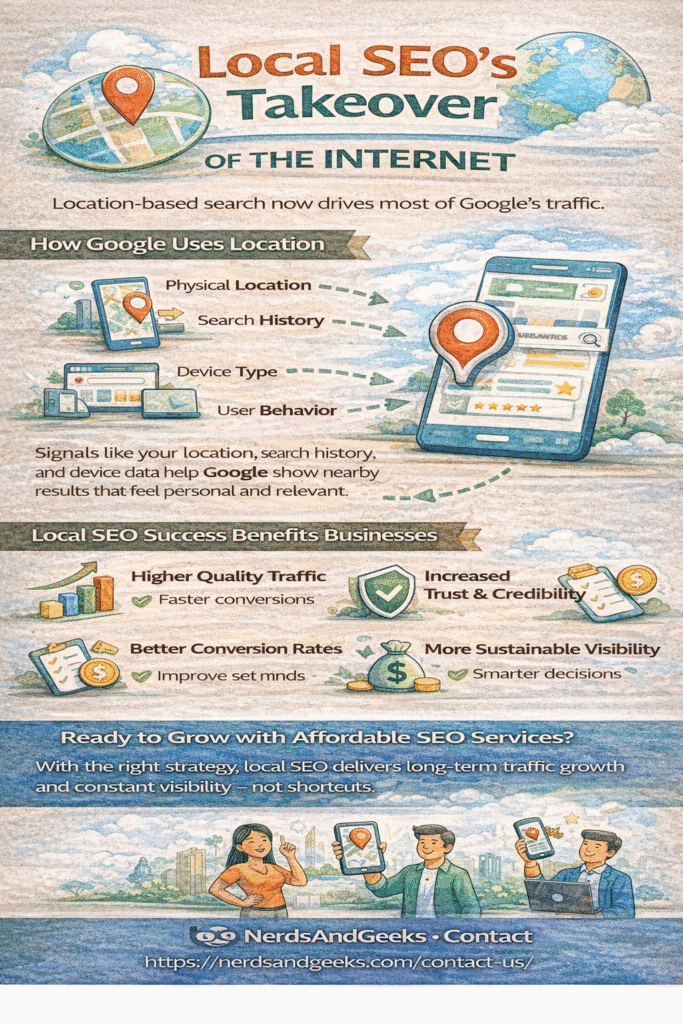
How Google Uses Location to Shape Search Results
Google no longer treats every search as global. Instead, it evaluates signals such as:
-
Physical location
-
Search history
-
Device type (mobile vs desktop)
-
Past behavior patterns
For example, when a user searches for a service like “SEO company” or “plumber,” Google assumes local intent unless told otherwise. As a result, nearby businesses appear first—even if they don’t include a city name in their search.
This shift has made local SEO one of the most powerful forms of online marketing.
Why Local Search Results Get Priority
Google’s goal is user satisfaction. When someone searches for a product or service, the most useful result is often the closest, most relevant option.
Local results help users:
-
Find businesses faster
-
Visit physical locations easily
-
Trust results that feel personal and relevant
Because of this, Google prioritizes businesses that clearly communicate their location, service area, and credibility.
The Role of User Behavior and Search History
Search results are no longer neutral or identical for everyone. Two users searching for the same term may see completely different results based on:
-
Previous searches
-
Businesses they interacted with
-
Reviews they’ve read
-
Locations they’ve visited
This personalization makes local SEO even more important. Once your business becomes visible and trusted in a specific area, Google continues showing it more frequently to similar users nearby.
Mobile Search Accelerated Local SEO Growth
The explosion of mobile usage has pushed local SEO even further. Most mobile searches are location-driven, whether intentional or not.
Searches like:
-
“near me”
-
“open now”
-
“best service nearby”
are now extremely common. Google responds by showing map listings, business profiles, reviews, and directions—often before traditional website results.
What This Means for Businesses Today
Local SEO is no longer optional. It is the foundation of modern search visibility for businesses with a physical presence or defined service area.
Businesses that invest in local optimization benefit from:
-
Higher-quality traffic
-
Better conversion rates
-
Increased trust and credibility
-
Long-term visibility without constant ad spend
Those that ignore it slowly disappear from search results—even if their services are excellent.
Frequently Asked Questions
What is local SEO?
Local SEO focuses on optimizing a business’s online presence so it appears in location-based search results.
Why does Google prioritize local results?
Google prioritizes local results to provide faster, more relevant answers based on user location and intent.
Do users need to type a city name for local results?
No. Google often assumes local intent automatically using location and search history.
Is local SEO only for small businesses?
No. Any business with a physical location or service area benefits from local SEO.
Does mobile search affect local SEO?
Yes. Mobile searches strongly favor local results, especially for nearby services.
The Future Is Local
As search engines become smarter, results will continue to feel more personal and more local. Businesses that clearly communicate where they are, who they serve, and why they’re trusted will dominate search visibility.
Local SEO isn’t a trend—it’s the new default.