When people first step into targeted email marketing, they often assume it’s as simple as writing one email every week. Technically, that can work—but it’s far from ideal.
The problem isn’t just time. It’s psychology, consistency, and reliability. Your long-time subscribers may know you well, but new subscribers don’t. If your tone, frequency, or messaging constantly changes, it creates confusion and weakens trust. On top of that, life happens—you get busy, distracted, or sick.
That’s why serious email marketers rely on autoresponders.
Why Autoresponders Are Essential
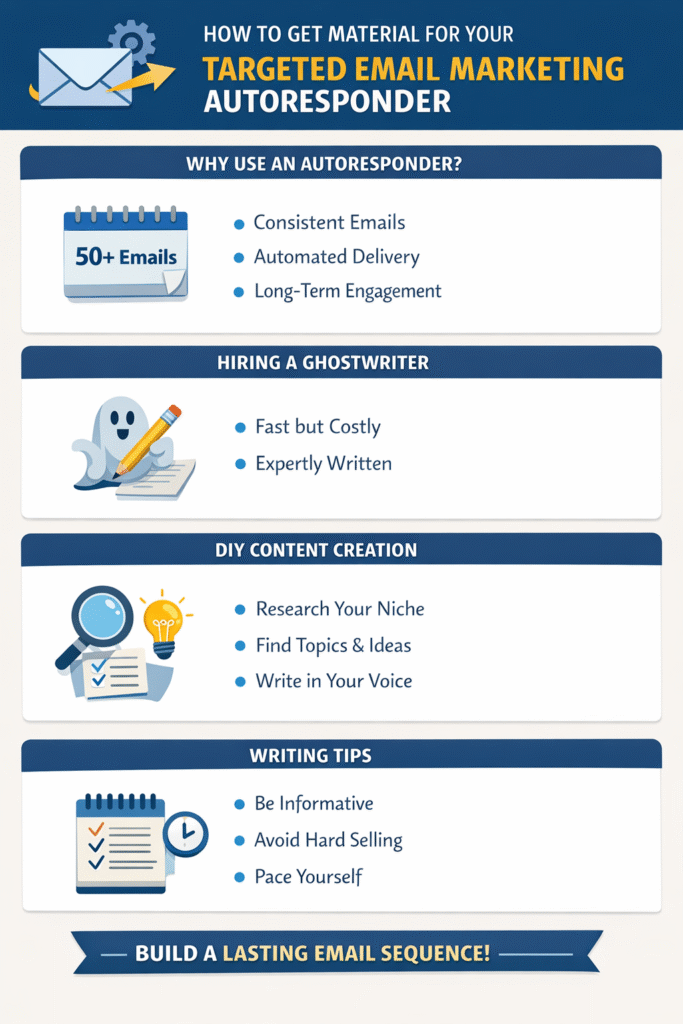
An autoresponder is an automated email system that delivers pre-written messages on a fixed schedule.
Once a subscriber joins your list, the autoresponder begins sending emails automatically—without requiring manual effort every time. This ensures consistency and protects your email marketing from interruptions.
Many experts recommend building a long autoresponder sequence—sometimes over 100 emails—sent weekly. That may sound excessive, but there’s a reason for it.
Over time:
-
Subscribers stop engaging
-
Email habits change
-
Interest naturally declines
A long sequence ensures every subscriber receives a complete experience, regardless of when they join.
Why Most Autoresponder Emails Should Not Sell
A common mistake is turning every email into a pitch.
In reality, only a small portion of your autoresponder should be promotional. The majority should focus on education, insight, and value. This builds trust and keeps subscribers opening your emails instead of ignoring them.
Effective autoresponder content:
-
Teaches something useful
-
Builds authority
-
Establishes familiarity
-
Softly introduces offers
Selling works best when it’s earned.
Option One: Hiring a Ghostwriter
The fastest way to build autoresponder content is outsourcing.
A skilled ghostwriter can research your niche, match your voice, and produce content at scale. For established businesses, this is often the most efficient option.
However, for solopreneurs or small startups, this isn’t always realistic. Budget matters—and that’s where the DIY approach comes in.
Option Two: Creating Content Yourself (The Smart Way)
You don’t need to reinvent the wheel.
Start by immersing yourself in your industry. Learn the terminology. Write down every phrase, product name, problem, and variation related to your niche.
For example, if you’re marketing kitchen appliances, your list might include:
-
Infrared oven
-
Convection oven
-
Tabletop oven
-
Halogen cooking
-
Energy-efficient appliances
Each phrase represents a potential email topic.
Turning Research Into Email Content
Once you have your keyword list, start researching existing educational content.
Reading articles, guides, and discussions helps you understand how topics are explained and which angles resonate. From there, you can paraphrase ideas in your own voice and apply them directly to your audience’s needs.
This approach:
-
Eliminates writer’s block
-
Keeps content relevant
-
Builds depth over time
You don’t need to rush. Write a few emails per week, load them into your autoresponder, and gradually build your sequence.
Consistency beats speed.
Long-Term Autoresponder Success
A well-built autoresponder works quietly in the background.
It welcomes new subscribers, educates them, builds trust, and introduces offers—without requiring constant attention. Once complete, it becomes one of the most powerful assets in targeted email marketing.
FAQ
Why is an autoresponder important for targeted email marketing?
It ensures consistent communication and prevents gaps caused by scheduling or availability issues.
How many emails should an autoresponder sequence include?
Many experts recommend long sequences, often 50–100+ emails, to support long-term engagement.
Should autoresponder emails be sales-focused?
No. Most emails should provide value, with only occasional promotional messages.
Can I build autoresponder content myself?
Yes. With research and planning, solopreneurs can successfully create their own content.
How quickly should autoresponder emails be written?
Slow and steady works best. Writing a few emails per week prevents burnout and improves quality.