
The internet is more crowded than ever. Businesses, personal brands, and creators are launching websites daily, all competing for the same limited attention. Simply having a website is no longer enough—you need website SEO to stand out.
Search engine optimization helps your site rise above the noise by making it easier for search engines—and people—to find you. Below are five practical ways website SEO can dramatically improve your online visibility.
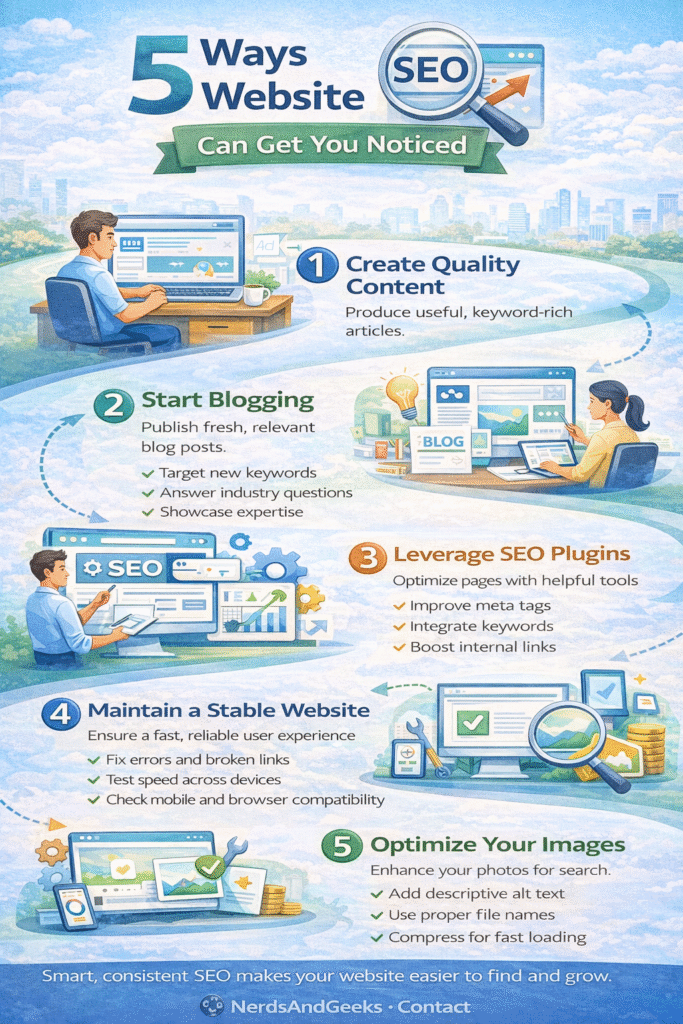
1. Create Content That Serves Both Users and Search Engines
Content is the foundation of website SEO. Search engines favor websites that provide helpful, relevant, and easy-to-read information.
Strong SEO content:
-
Uses keywords naturally (not forced)
-
Answers real user questions
-
Is updated regularly
-
Keeps readers engaged
When your content is valuable, visitors stay longer—and search engines notice.
2. Use Blogging to Build Consistent Visibility
Blogs are one of the most effective SEO tools available. They give you ongoing opportunities to target new keywords and communicate directly with your audience.
A well-maintained blog helps you:
-
Stay relevant in search results
-
Build authority in your industry
-
Create fresh content for search engines to index
-
Keep customers informed and engaged
Even one quality post per month can make a difference over time.
3. Leverage SEO Plugins for Smarter Optimization
SEO plugins simplify optimization, especially for WordPress websites. These tools help ensure your pages are structured correctly for search engines.
SEO plugins assist with:
-
Meta titles and descriptions
-
Keyword placement
-
Internal linking
-
Readability improvements
They don’t replace strategy—but they make execution easier and more consistent.
4. Maintain a Stable, User-Friendly Website
SEO isn’t just about keywords. A technically stable website plays a huge role in search performance.
Before publishing updates:
-
Test your site across browsers
-
Check mobile responsiveness
-
Ensure pages load properly
-
Avoid broken links or formatting issues
A smooth user experience supports both SEO rankings and customer trust.
5. Optimize Images for Search Visibility
Images do more than enhance design—they also contribute to SEO when optimized correctly.
Image optimization includes:
-
Descriptive file names
-
Relevant alt text
-
Proper sizing for fast load times
-
Contextual placement within content
Search engines index images, and optimized visuals can drive additional traffic through image search results.
Why Website SEO Still Matters
Website SEO helps attract visitors who are actively searching for what you offer. When done correctly, it delivers targeted traffic, stronger engagement, and long-term visibility—without relying entirely on paid ads.
Small improvements, applied consistently, can produce powerful results.
Frequently Asked Questions
What is website SEO?
Website SEO is the practice of optimizing content, structure, and technical elements to improve search engine visibility.
How long does website SEO take to show results?
SEO typically shows gradual improvements over a few months, with stronger results building over time.
Are blogs necessary for SEO?
Blogs are not required, but they greatly improve SEO by adding fresh content and keyword opportunities.
Do images really affect SEO?
Yes. Optimized images improve accessibility, page speed, and search visibility.
Can small websites compete using SEO?
Absolutely. With focused keywords and quality content, small websites can outperform larger competitors.
Ready to Grow with Website SEO?
Getting noticed online doesn’t require shortcuts—just smart optimization and consistency. When SEO aligns with user needs, your website becomes easier to find, easier to trust, and easier to grow.