
It’s no secret that the internet has become crowded. Today, small businesses, large companies, and even individuals can launch a website quickly and affordably. While that’s great for accessibility, it also means standing out online is harder than ever.
With millions of websites competing for attention, simply being online is no longer enough. This is where website SEO plays a critical role. Search engine optimization helps your site become more visible, more relevant, and more attractive to the right audience.
Below are five effective ways website SEO can help your business get noticed.
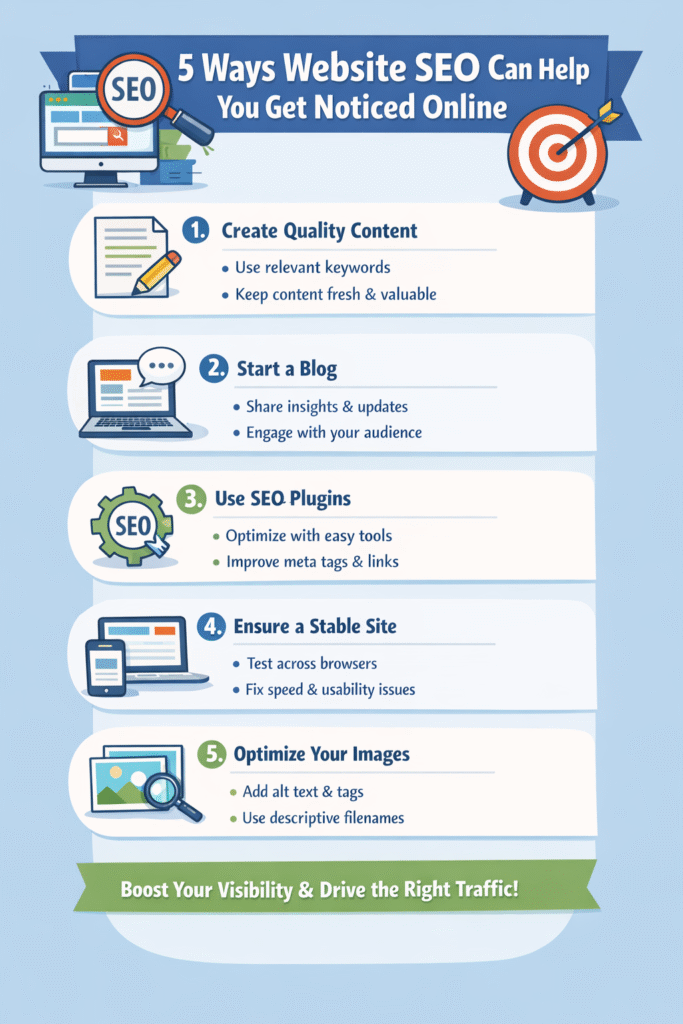
1. High-Quality Content Drives Visibility
Content remains one of the most important elements of website SEO. Search engines prioritize websites that offer useful, relevant, and well-structured information.
Using targeted keywords naturally within your content helps search engines understand what your website is about. At the same time, content must be written for real people. Clear language, logical structure, and valuable insights keep visitors engaged and encourage them to return.
Regularly updating your content also signals freshness to search engines, which can lead to improved rankings and recurring traffic.
2. Blogging Builds Authority and Engagement
If your website doesn’t include a blog, you’re missing a major SEO opportunity. Blogging allows you to publish fresh content consistently while addressing topics your audience actually cares about.
A well-maintained blog:
-
Improves keyword coverage
-
Encourages repeat visits
-
Builds trust and authority
-
Creates internal linking opportunities
Blogs also provide a more informal way to communicate with customers, keeping your brand human and approachable.
3. SEO Plugins Simplify Optimization
SEO plugins can make optimization easier, especially for WordPress websites. These tools help guide keyword usage, improve page structure, and generate metadata such as titles and descriptions.
Many SEO plugins are free or low-cost, making them accessible for businesses of all sizes. When used correctly, they help ensure that your content follows basic SEO best practices without requiring deep technical expertise.
4. A Stable Website Improves Rankings and User Experience
Search engines value websites that function smoothly across all devices, browsers, and operating systems. A stable site ensures visitors can access your content without errors, broken layouts, or slow loading times.
Before publishing updates or new content, testing your site’s performance helps prevent issues that could harm both user experience and search rankings. Stability is not just good for SEO—it’s essential for credibility.
5. Images Can Boost SEO When Used Correctly
SEO isn’t limited to written content. Images also play an important role in website optimization.
By adding descriptive file names, titles, and alt text to images, you help search engines understand their context. Optimized images can appear in image search results and improve overall page relevance.
Using images thoughtfully also enhances user engagement, making content easier to digest and more visually appealing.
Final Thoughts
Website SEO is one of the most effective ways to attract attention online without relying solely on paid advertising. By focusing on quality content, consistent blogging, smart tools, technical stability, and image optimization, your website becomes easier to find and more appealing to visitors.
When done correctly, SEO doesn’t just increase traffic—it brings the right traffic and helps your business grow sustainably.
FAQ
Why is website SEO important for online visibility?
Website SEO helps search engines understand your content and match it with relevant user searches. When done correctly, SEO improves rankings, increases visibility, and drives targeted traffic from people actively looking for your products or services.
How often should website content be updated for SEO?
Updating content regularly is ideal, but quality matters more than frequency. Refreshing key pages, adding new blog posts, and updating outdated information every few weeks or months helps maintain strong search engine performance.
Do blogs really help with website SEO?
Yes. Blogs add fresh content, expand keyword coverage, and improve internal linking. Over time, blogging builds authority, keeps users engaged longer, and increases the chances of ranking for long-tail search queries.
Are SEO plugins necessary for optimization?
SEO plugins are not mandatory, but they are very helpful—especially for non-technical users. They simplify tasks like optimizing meta titles, descriptions, headings, and internal links while reducing common SEO mistakes.
Can images improve SEO rankings?
Images support SEO when optimized correctly. Using descriptive file names, alt text, and titles helps search engines understand image content, improves accessibility, and can generate additional traffic through image search results.